Last updated October 30, 2026
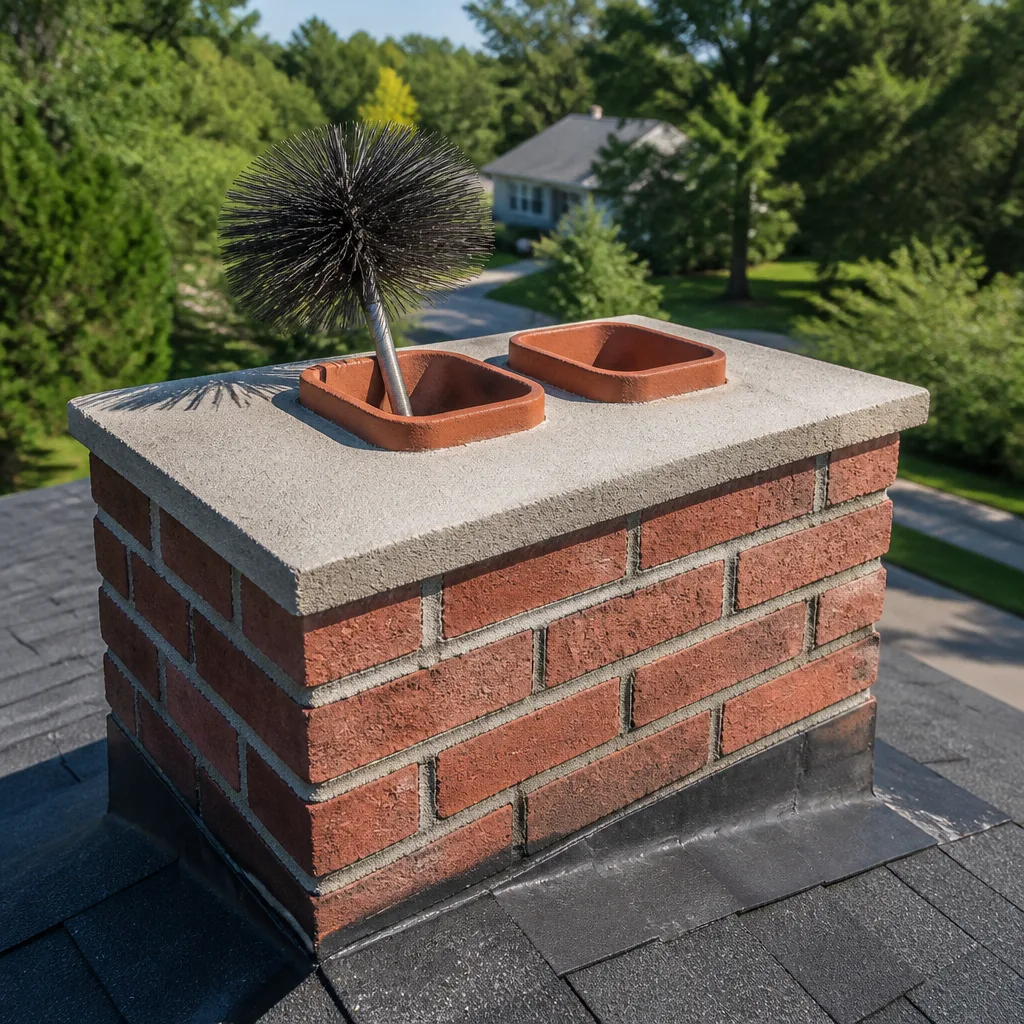 Sweep & inspection
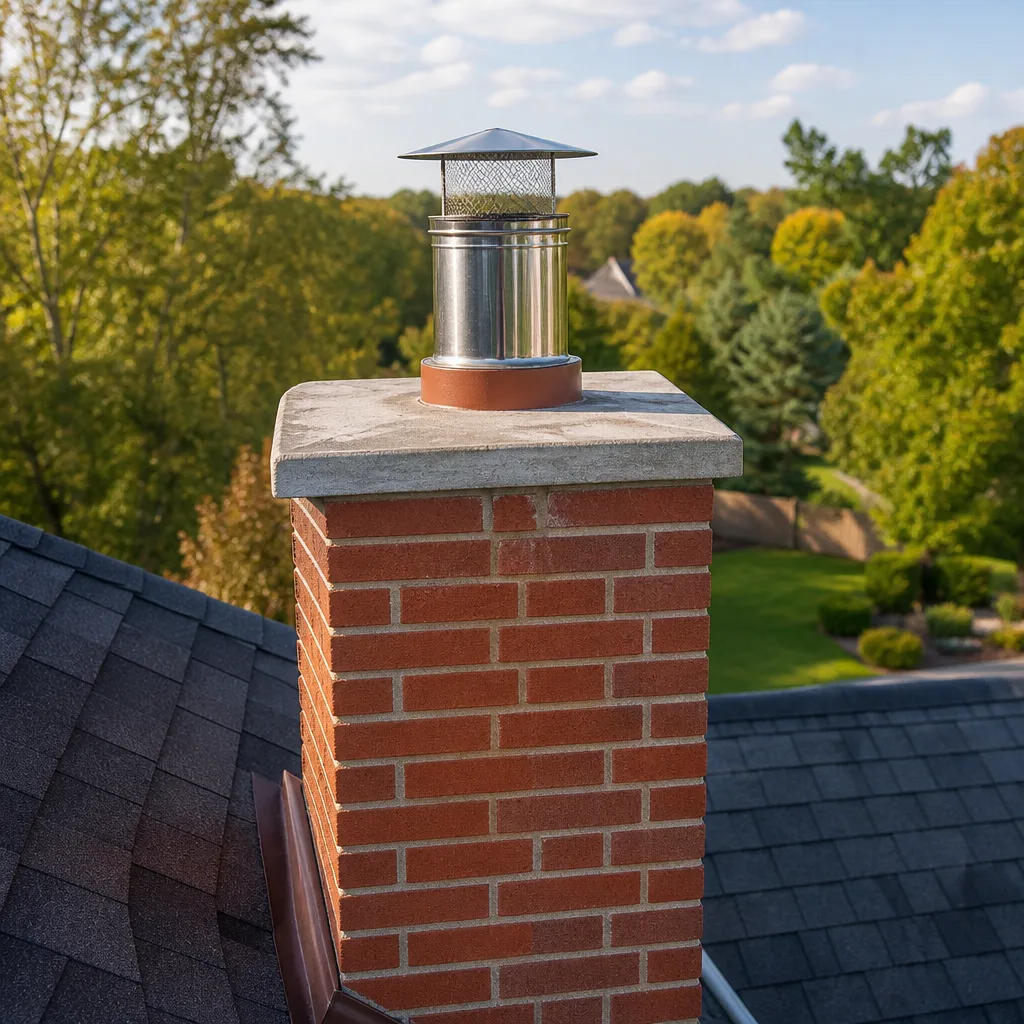
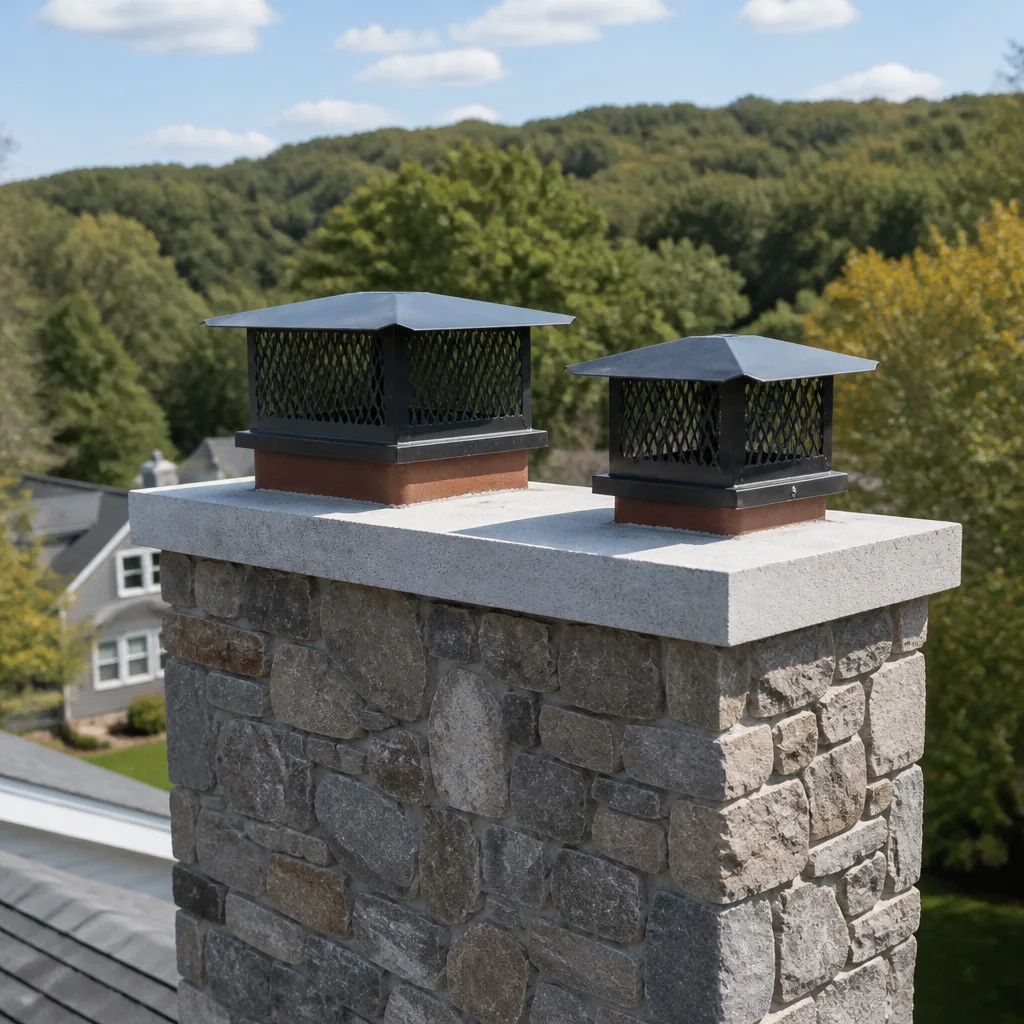 Caps & crowns
 Flue relining
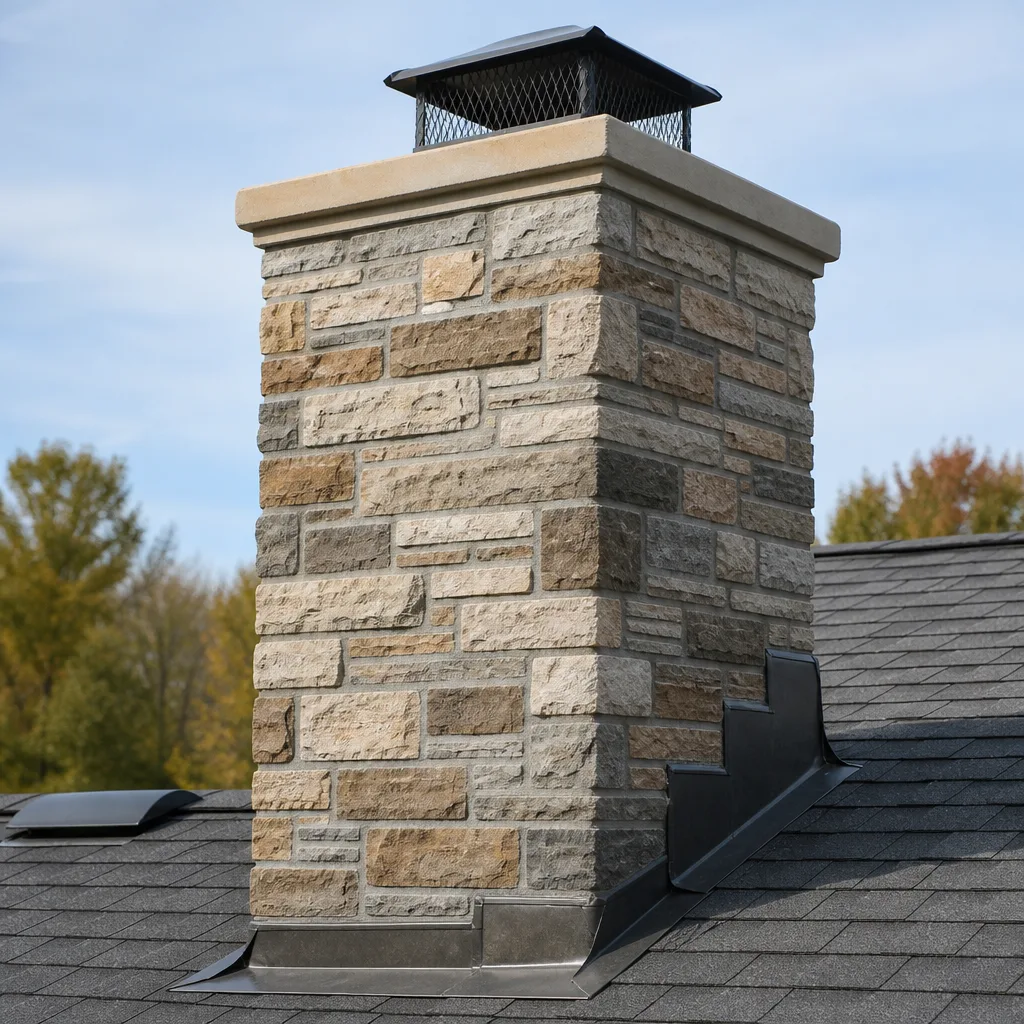 Masonry repair
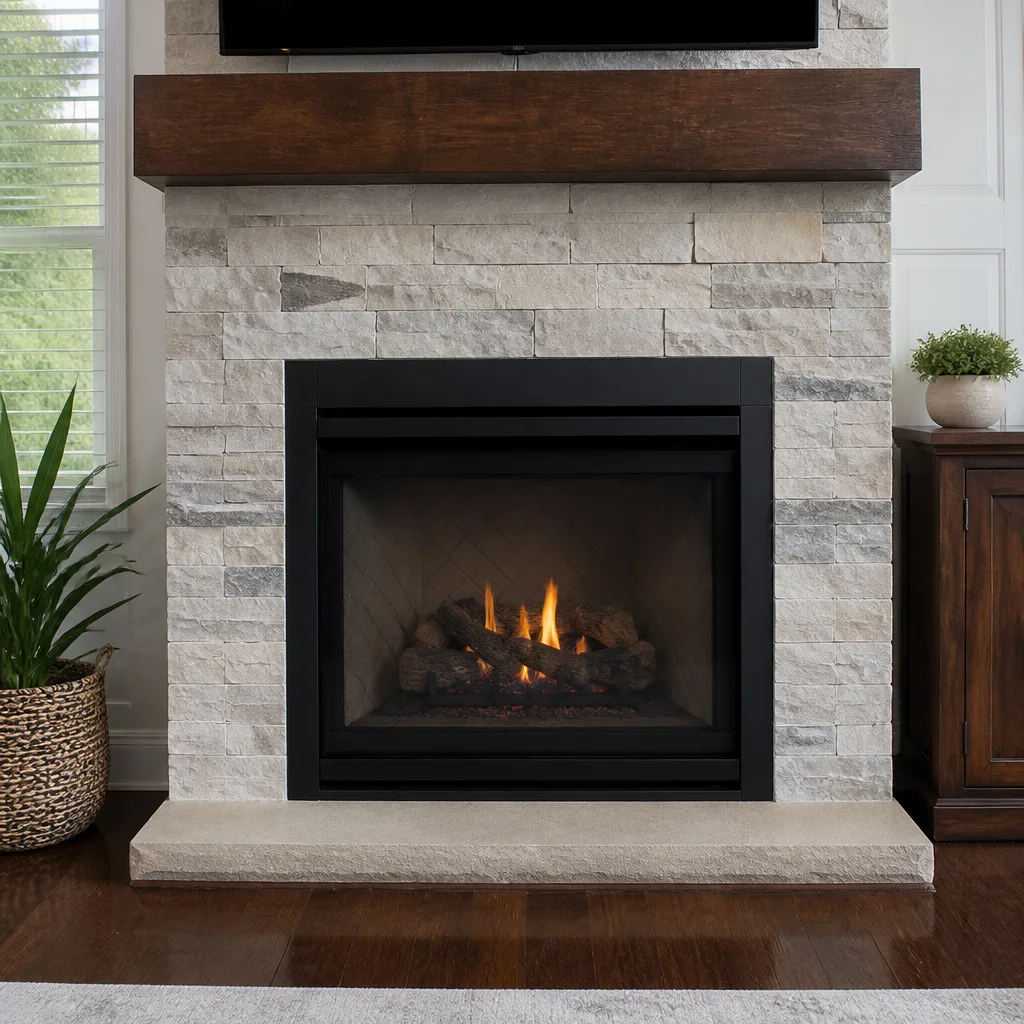 Gas fireplace service
Level 1 sweep and inspection to the NFPA 211 annual standard - flue, crown, cap, and flashing checked and photographed
Chimney sweep logs do not sweep chimneys. They loosen some creosote - which then falls where a brush and vacuum still have to collect it.
The Complete Chimney Sweep Guide for Murrieta Homeowners
Most chimney guides assume you’re burning wood three nights a week through a hard winter. In Murrieta, the average homeowner lights maybe 10 to 15 fires a season. That sounds safe, almost too infrequent to matter. But it’s exactly the usage pattern that lets Stage 2 creosote build quietly without triggering obvious warning signs. Low, slow fires and long gaps between burns create a dense, glazed residue that behaves differently than the fluffy soot produced by heavy daily use. This guide replaces generic chimney advice with a Murrieta-specific maintenance framework tied to how homes here actually operate. For a deeper dive, see The Complete Guide to Chimney Cleaning in Murrieta.
Quick Answer
A Chimney Sweep in Murrieta typically costs $180 to $340 for a standard cleaning and Level 1 inspection, and should be scheduled annually even if you only burn 10 to 15 fires per season. Murrieta’s dry climate and infrequent burning patterns produce hard, glazed creosote deposits that a standard visual check misses, which is why a professional inspection matters more here than in colder, high-use regions.
Styles & brands we work with
Table of Contents
- Why Murrieta’s Climate Changes Your Chimney Risk Profile
- Understanding Creosote Stages: What Low-Frequency Burning Actually Does
- Santa Ana Winds and the Smoke Chamber Problem
- Masonry Stress Patterns in Murrieta’s 1990s – 2000s Housing Stock
- How to Read a Level 1 vs. Level 2 Inspection Report
- Murrieta’s Seasonal Chimney Maintenance Calendar
- When a Liner Repair Is Warranted (and When It Isn’t)
- Common Mistakes to Avoid
Why Murrieta’s Climate Changes Your Chimney Risk Profile
Murrieta sits in a semi-arid Mediterranean climate zone with roughly 260 sunny days a year and rainfall that rarely exceeds 14 inches annually. That dryness has a direct effect on chimney systems. Wood stored in low-humidity conditions burns hotter and faster than wood kept in damp environments. The moisture content of your firewood matters because wet wood produces more smoke and more incomplete combustion byproducts. Dry wood burns cleaner, but it also burns faster and hotter, which creates a different set of conditions inside the flue. The rapid temperature spike from a hot, fast fire on a cold flue causes thermal expansion stress that, repeated over years, contributes to liner cracking in ways that slower, cooler fires do not.
We also see a distinct pattern in Murrieta: homes here go months without any chimney use at all. From May through October, most fireplaces sit idle. During that long idle period, any creosote that accumulated during winter does not get burned off by subsequent fires. It sits, cools, and hardens. When the first fire of autumn arrives, that hardened creosote does not burn away. It remains adhered to the flue wall, and in some cases the heat from the new fire can ignite it. That is the chimney fire scenario most Murrieta homeowners do not see coming, because they assume a rarely used fireplace is a safe fireplace. The opposite is true. A rarely used fireplace that has not been professionally cleaned is a firebox waiting for the wrong set of conditions.
The chimney sweep in Murrieta we perform follows a protocol calibrated for this specific climate pattern. We do not just scrape soot. We assess the condition of the creosote layer, measure its thickness, and document what stage it has reached. That distinction matters because the cleaning method for Stage 2 glazed creosote differs fundamentally from the method for Stage 1 dusty soot. A standard brush sweep works for Stage 1. Stage 2 requires rotary tools and sometimes chemical treatment. If a sweep shows up with only a basic brush and a vacuum, they are not equipped to handle what Murrieta’s low-burn homes actually produce.
Understanding Creosote Stages: What Low-Frequency Burning Actually Does
Creosote forms in three recognized stages, and knowing the difference helps you understand what a chimney professional is looking at when they show you photos from inside your flue.
Stage 1: Flaky Dust
This is the light, dusty residue that forms from every wood fire. It brushes off easily and looks like black powder. Stage 1 creosote is what most people picture when they think of chimney soot. A standard brush sweep handles it without issue. In Murrieta, homes that burn seasoned oak or manufactured logs occasionally and have a properly drafting chimney may stay in Stage 1 for years.
Stage 2: Glazed Coating
Stage 2 creosote is shiny, hard, and adhered firmly to the flue wall. It resembles black glass. This is the stage we see most often in Murrieta homes that burn 10 to 15 fires per season. Why? Because low-frequency burning allows each creosote layer to cool and compress before the next fire adds another layer. The heat from each subsequent fire then bakes those compressed layers into a dense, crystalline coating. High-frequency burners in cold climates push creosote through the system faster, but they also burn hot, long fires that naturally reduce the buildup. Murrieta’s short, occasional fires never reach the sustained temperatures that would burn off early-stage creosote. The result is a slow accumulation of Stage 2 glaze that a homeowner cannot see from below.
Removing Stage 2 creosote requires rotary cleaning tools with metal heads that scrape and chip the glaze from the flue wall. In some cases, a chemical treatment is applied first to soften the glaze before mechanical removal. This is a more involved process than a basic sweep, and it takes longer. If your chimney has not been cleaned in three or more seasons of occasional use, expect that the technician will need rotary tools to do the job right.
Stage 3: Caked Tar
Stage 3 creosote is a thick, tarry layer that forms when Stage 2 glaze continues to build and trap moisture. It is highly combustible and requires aggressive mechanical removal, sometimes followed by a chemical treatment process that can take days. Stage 3 is less common in Murrieta’s dry climate, but we do see it in chimneys that have been neglected for a decade or more, particularly in flues with restricted airflow or drafting problems.
The takeaway is simple: the number of fires you burn does not determine creosote risk by itself. For more guides & resources, explore our blog. The pattern of burning, the moisture content of your wood, and the interval between cleanings all matter. In Murrieta, the danger is not overuse. It is underattention.
Santa Ana Winds and the Smoke Chamber Problem
Santa Ana wind events are a defining feature of living in Murrieta and the broader Inland Empire. These dry, gusty winds blow from the northeast and can reach sustained speeds of 40 to 60 miles per hour, with gusts exceeding 70 in some corridors. What does that have to do with your chimney? Two things.
First, strong wind creates negative pressure zones around your roofline. When a Santa Ana gust hits your chimney cap, it can overpower the natural draft of your flue and push air downward. If you have a fire burning, that downward pressure drives combustion byproducts back down the flue. Instead of exiting through the cap, smoke and creosote vapor get forced into the smoke chamber, that transitional area above the firebox where the flue narrows. Over multiple Santa Ana events, this backflow deposits creosote and soot in the smoke chamber walls, a location that standard brush sweeps often miss entirely.
Second, wind-driven backflow accelerates the accumulation of debris in the smoke chamber because that area has irregular surfaces and ledges that catch particulate matter. In our experience, Murrieta homes with east-facing chimneys and homes on elevated lots in neighborhoods like Bear Creek or the Copper Canyon area see the most pronounced effect. The smoke chamber in these homes can hold significant creosote even when the flue itself looks reasonably clean.
This is why a thorough chimney sweep in Murrieta must include smoke chamber inspection and cleaning, as explained in our DIY vs Professional Chimney Cleaning: The Murrieta Homeowner’s Decision Guide. Many single-service sweep trucks only run a brush up the flue and vacuum the firebox. They do not open the damper area fully to access the smoke chamber. If your chimney has been exposed to repeated Santa Ana conditions, the smoke chamber is where the problem is hiding. Ask your sweep explicitly whether they clean the smoke chamber. If they look confused, find another sweep.
The fix for recurring wind-driven drafting problems is often a properly sized chimney cap, sometimes a wind-resistant cap design that directs airflow to enhance draft rather than fight it. Mayflower Chimney Sweep stocks and installs caps from Olympia Chimney, a brand recognized in the chimney industry for durable stainless steel and copper cap designs. The right cap makes a measurable difference during Murrieta’s Santa Ana season.
Masonry Stress Patterns in Murrieta’s 1990s – 2000s Housing Stock
Murrieta experienced a massive housing construction boom between roughly 1995 and 2008. Entire master-planned communities went from grading to full build-out in under five years. That pace of construction has implications for chimney longevity, and we see specific stress patterns in these homes that differ from older, site-built masonry chimneys in places like downtown Murrieta or older Riverside County communities.
Most Murrieta homes built during this boom use prefabricated fireplace systems rather than traditional masonry chimneys. A prefab system includes a factory-built metal firebox, a double-wall or triple-wall metal flue pipe, and a framed chase enclosure on the roof. These systems were installed quickly, often by subcontractors working at volume. The quality of the installation varies. We regularly find issues like improperly sealed chase tops, flue pipes that are slightly off-alignment, and inadequate clearance between the flue and combustible framing. These are not defects in the product. They are installation shortcuts that happened during the building rush.
Prefab fireboxes age differently than masonry fireboxes. A masonry fireplace can handle decades of heat cycling because brick and mortar expand and contract slowly. A factory-built metal firebox has a more limited lifespan, typically 20 to 30 years depending on use and exposure. We are now in 2026, which means homes built in 1996 to 2006 are reaching the point where original prefab components are hitting the end of their service life. We see cracked refractory panels, warped metal components, and deteriorated flue liners in Murrieta homes from this era with increasing frequency.
If your home was built during this window and still has its original fireplace system, a Level 2 inspection is the right call even if nothing seems wrong. The chimney repair in Murrieta we perform often starts with an inspection that reveals issues a visual Level 1 check was never designed to catch. Refractory panel replacement, flue realignment, and chase cover repair are all common findings in 1990s-era Murrieta homes.
How to Read a Level 1 vs. Level 2 Inspection Report
The chimney industry uses a three-tier inspection system, and understanding the difference between Level 1 and Level 2 helps you make sense of what a sweep is telling you and whether their recommendation is legitimate.
A Level 1 inspection is visual only. The technician looks at the readily accessible portions of the fireplace, the flue interior as visible from below and above, and checks for obvious blockages or creosote accumulation. No special tools are required beyond a flashlight and a mirror. A Level 1 is appropriate when the chimney has not changed in use pattern, has no known problems, and is receiving routine annual maintenance. In Murrieta, a Level 1 inspection accompanies a standard sweep and costs between $180 and $340 combined.
A Level 2 inspection is more involved. It includes everything in Level 1 plus access to concealed areas, typically through the attic or crawlspace, and often uses a video camera to scan the flue interior. A Level 2 is required when there has been a change in the system: a new appliance, a new liner, a change in fuel type, or a significant event like an earthquake, a chimney fire, or a house sale. In Murrieta, Level 2 inspections are also warranted when a home has been unoccupied for an extended period, when there is visible spalling on the chimney exterior, or when the home was built during the 1990s – 2000s boom and still has original components.
- Review the scope first. A legitimate report states clearly whether the inspection was Level 1 or Level 2 and what areas were accessed. If the report is vague, ask questions.
- Look for the photo documentation. Any reputable sweep in Murrieta will provide photos from the video scan. If they recommend a liner replacement or masonry repair without showing you images, get a second opinion. We tell our customers what we find, in plain language, before we touch anything, and the photos are part of that conversation.
- Focus on the “can wait” versus “must address” distinctions. A good inspection report separates cosmetic issues from safety issues. Spalling brick on the exterior may be cosmetic. A cracked flue liner is not. Ask your inspector to classify each finding.
- Verify the brand references. If a liner replacement is recommended, the report should specify the product. We use brands like DuraFlex and HeatShield because they are recognized across the chimney industry and homeowners can research them independently. A vague recommendation of “a new liner” without a brand or specification is a red flag.
The most common condition in Murrieta homes that triggers a Level 2 upgrade is a home sale. California real estate transactions frequently require a Level 2 chimney inspection when a wood-burning or gas fireplace is present. If you are buying or selling a home in Murrieta, plan for this inspection and budget accordingly.
Murrieta’s Seasonal Chimney Maintenance Calendar
Murrieta does not have a long, punishing winter. What it has is a distinct fire season from roughly November through March, with spikes around the holidays and during the occasional cold snap. A maintenance calendar tuned to this rhythm keeps your chimney safe without over-servicing.
October: Pre-Season Inspection and Sweep
Schedule your annual sweep and Level 1 inspection in October, before the first fire. This is the single most important appointment on the calendar. The sweep removes any creosote that accumulated during the previous season and any debris that settled during the summer idle months. The inspection checks the chimney cap, the damper, the flue interior, and the smoke chamber. If you have not used the fireplace since March, October is the reset point. A pre-season sweep in October typically costs $180 to $340 in Murrieta, depending on flue condition and whether rotary tools are needed.
November through March: Burn Smart and Monitor
During fire season, burn only seasoned hardwood or high-quality manufactured logs. Avoid burning softwoods like pine, which produces more creosote-forming residue. Keep fires moderate in size. A roaring fire on the first cold night feels good, but a rapid temperature spike on a cold flue stresses metal and masonry components. If you notice any new odor, visible smoke inside the home, or a change in how the fire draws, stop using the fireplace and schedule an inspection.
April: Post-Season Check and Clean-Out
After your last fire of the season, let the firebox cool completely and remove the ash. A thin layer of ash actually helps with fire starting, but a deep layer restricts airflow and holds moisture against the firebox floor. If you noticed any issues during the burning season, schedule a post-season inspection in April so any repairs can be completed during the mild months when chimney work is easier and faster.
May through September: The Idle Season
During the idle months, check the chimney cap from the ground after major wind events. Santa Ana season is most active from September through December, but windy conditions happen year-round. Look for visible cap damage or anything that appears lodged on the cap. Keep the damper closed during summer to prevent conditioned air loss. And consider scheduling any needed repairs during this window, when contractors have more scheduling flexibility in Murrieta.
When a Liner Repair Is Warranted (and When It Isn’t)
This is where Murrieta homeowners get burned by aggressive upsell tactics, and it is also where legitimate safety concerns get dismissed. The question, “Do I need a new liner?” deserves a straight answer.
A flue liner is the barrier between the heat and combustion byproducts inside your chimney and the surrounding masonry or framing. When the liner is intact, it performs two jobs: it protects the structure from heat transfer and it channels smoke and gases safely to the exterior. When the liner cracks, both jobs are compromised. Heat escapes through the crack into the surrounding material. If that material is wood framing, the risk is structural failure over time. If it is masonry, the heat accelerates mortar deterioration. And a cracked liner allows combustion gases, including carbon monoxide, to seep into areas they should not be.
You need a liner repair or replacement when the video inspection shows cracks that penetrate the full thickness of the liner, when sections of the liner have separated or collapsed, or when the liner has deteriorated to the point that flue gases are escaping into the chase or attic. These are not cosmetic issues. They are safety issues.
You do not need a liner replacement just because the liner is dirty. A heavy creosote coating is a cleaning problem, not a replacement problem. You also do not need a replacement because the chimney is a certain age. Age is a risk factor, not a diagnosis. The diagnosis comes from the camera.
When a replacement is warranted, the material matters. We install HeatShield cerfractory sealant systems and DuraFlex stainless steel liners because both are products with verifiable quality standards and long service histories. HeatShield is applied as a pumped sealant that fills and seals cracks and gaps, restoring the original liner’s integrity. DuraFlex is a flexible stainless steel liner that creates a new flue passage inside the existing chimney. The choice between the two depends on the condition of the existing structure, the fireplace type, and the intended use. Both are installed by certified chimney professionals nationwide, and both come with documentation specifying what was installed and when.
Our position is simple: we name what we use and stand behind it. If a contractor recommends a liner replacement without showing you the video, without naming the product, or without explaining why the spec matches your situation, walk away and get a second opinion.
Dryer Vents: The Other Chimney in Your Murrieta Home
Your clothes dryer vents to the exterior through a duct system that functions like a miniature chimney. It carries hot, moist air and lint particles from the dryer to the outdoors. When that duct clogs with lint, the dryer works harder, runs hotter, and creates the conditions for a dryer fire. According to the U.S. Fire Administration, clothes dryers are responsible for roughly 2,900 home fires annually, and the leading cause is failure to clean the vent.
In Murrieta, where many homes have laundry rooms located deep in the floor plan with long duct runs to the exterior, lint accumulation happens faster than in homes with short, direct vent paths. A 20-foot duct run with multiple elbows is a higher risk configuration than a straight 6-foot run. Homes in the Harveston and Central Park areas of Murrieta often have longer interior duct runs, and we see correspondingly higher lint buildup in those configurations.
Dryer vent cleaning in Murrieta is not a luxury add-on. It is a fire-safety measure that belongs in the same annual routine as your chimney sweep. The service involves disconnecting the dryer, running a rotary brush through the full duct length, and verifying proper airflow at the exterior vent termination. We also check the visible portions of the duct for damage, separation, or improper materials. Flexible foil ducts, common in 1990s-era Murrieta homes, should be replaced with rigid metal ducting wherever accessible.
The signs of a clogged dryer vent are easy to miss: clothes take longer to dry, the dryer exterior gets hot to the touch, the laundry room feels humid during cycles, and there is a burning smell when the dryer runs. If you notice any of these, schedule a cleaning before the problem becomes a hazard. A dryer vent cleaning in Murrieta typically costs $120 to $200, which is a small price compared to the alternative.
See the difference
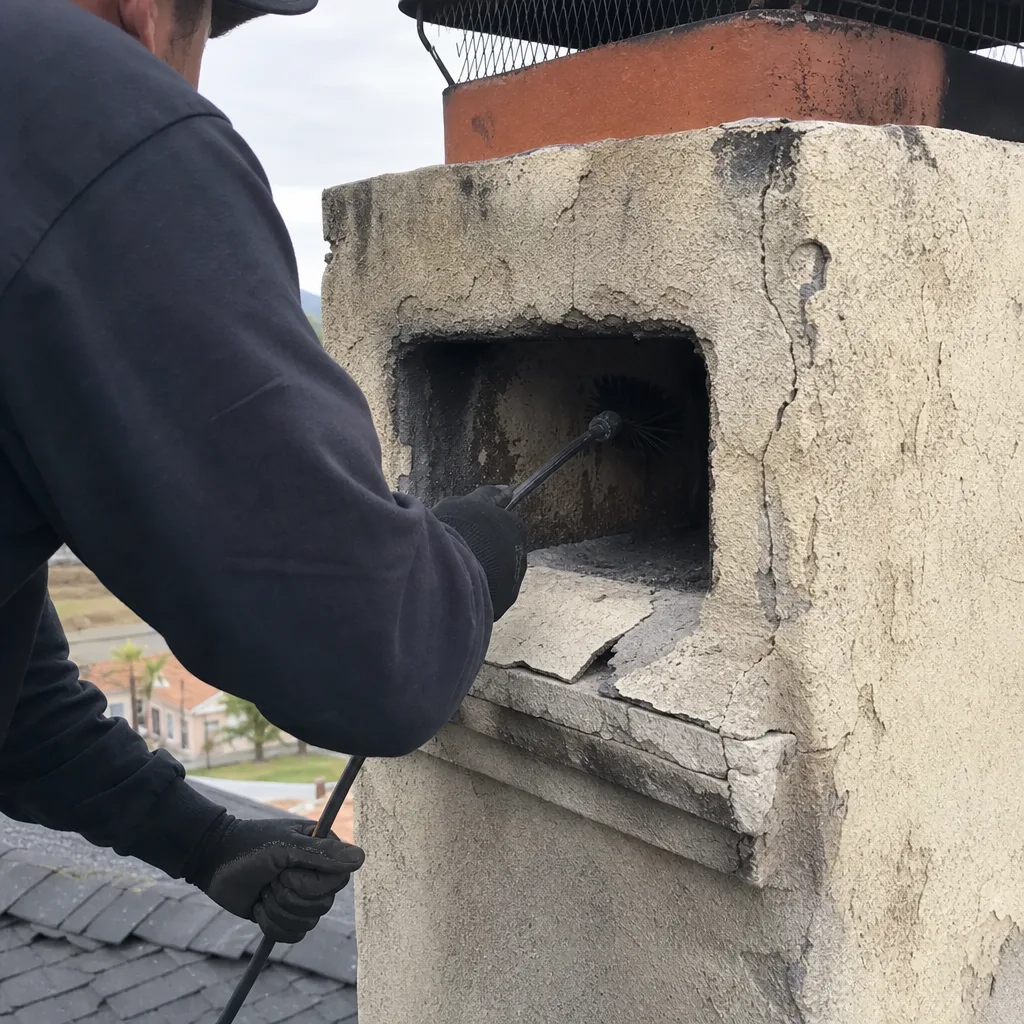 Before
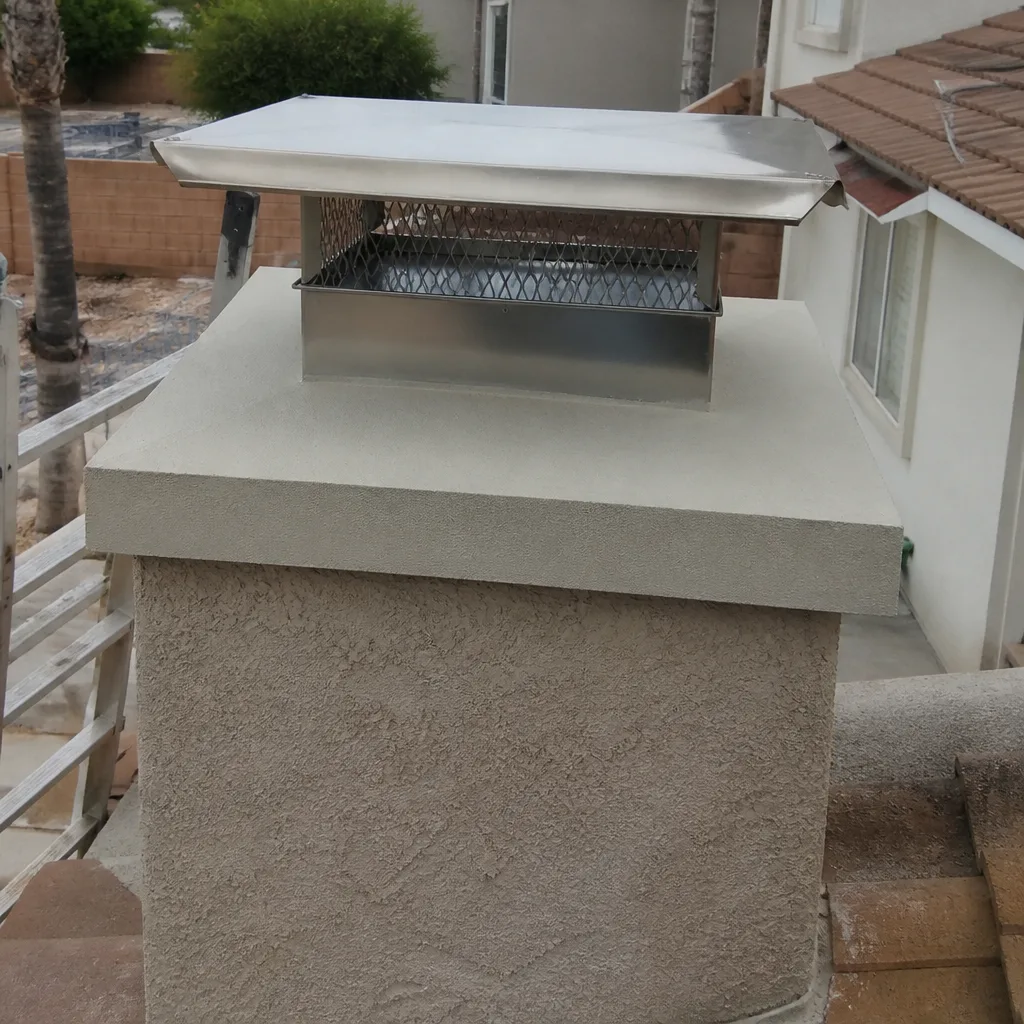 After
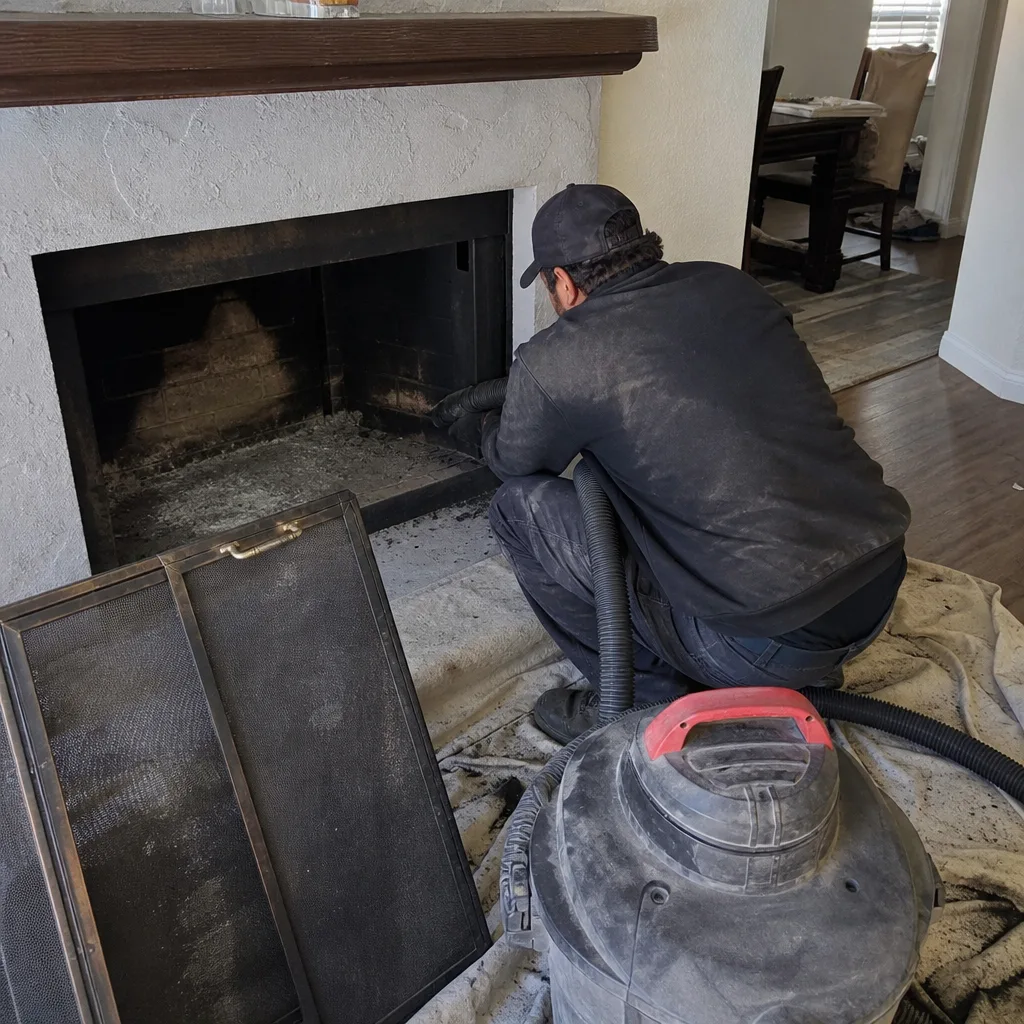 Before
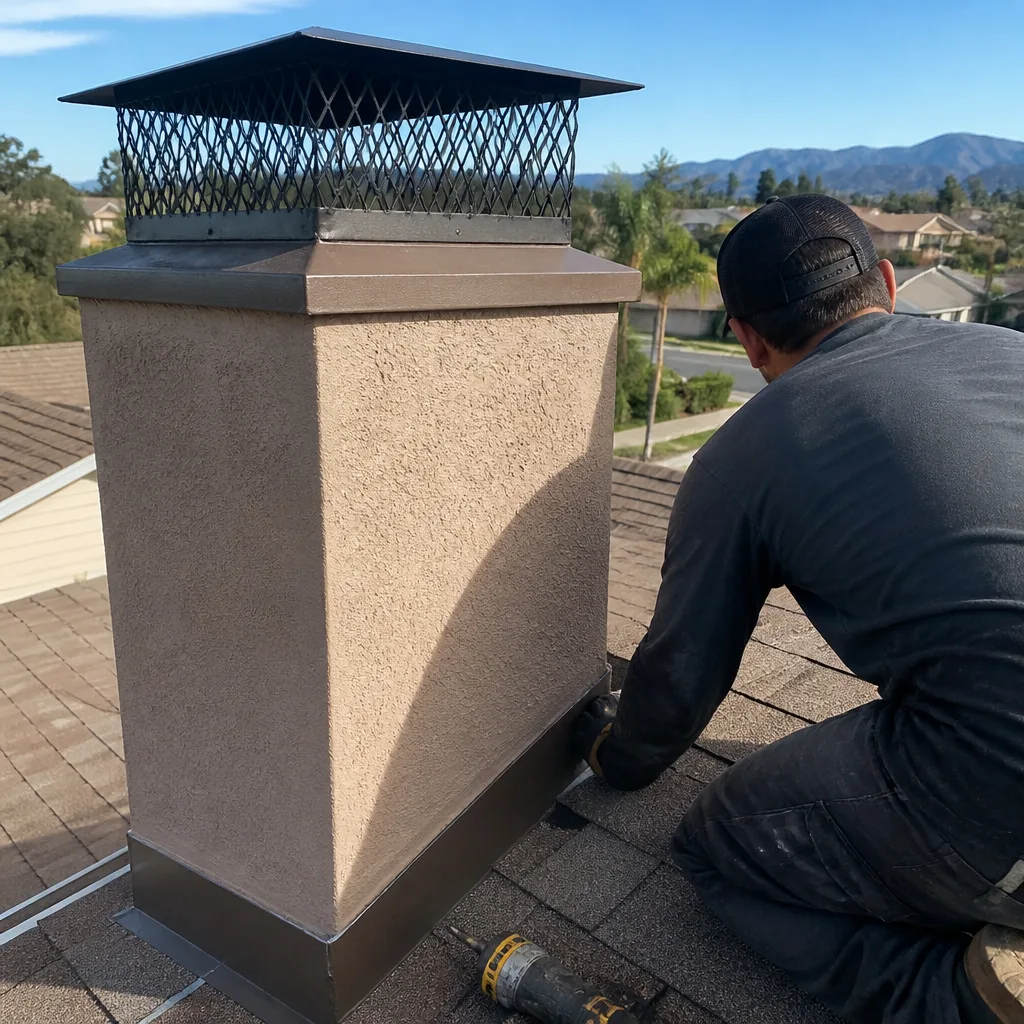 After
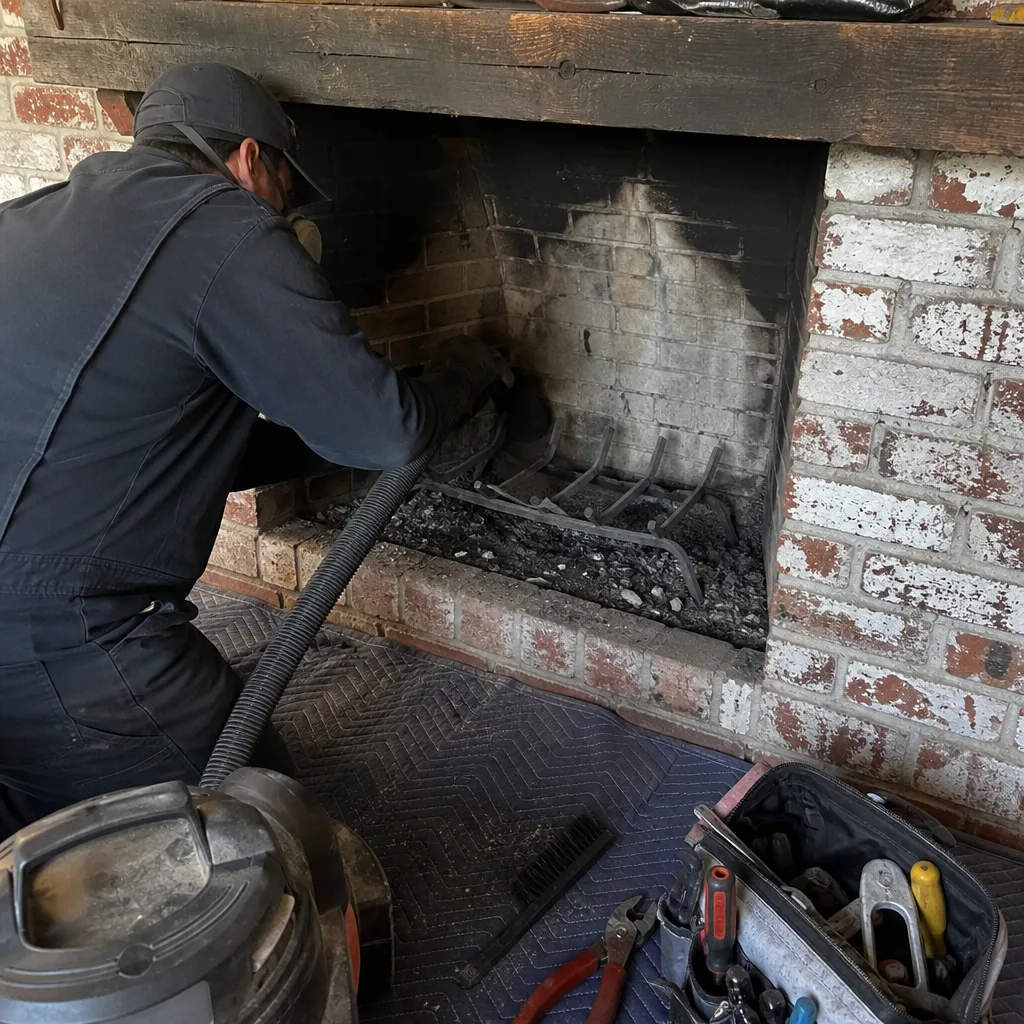 Before
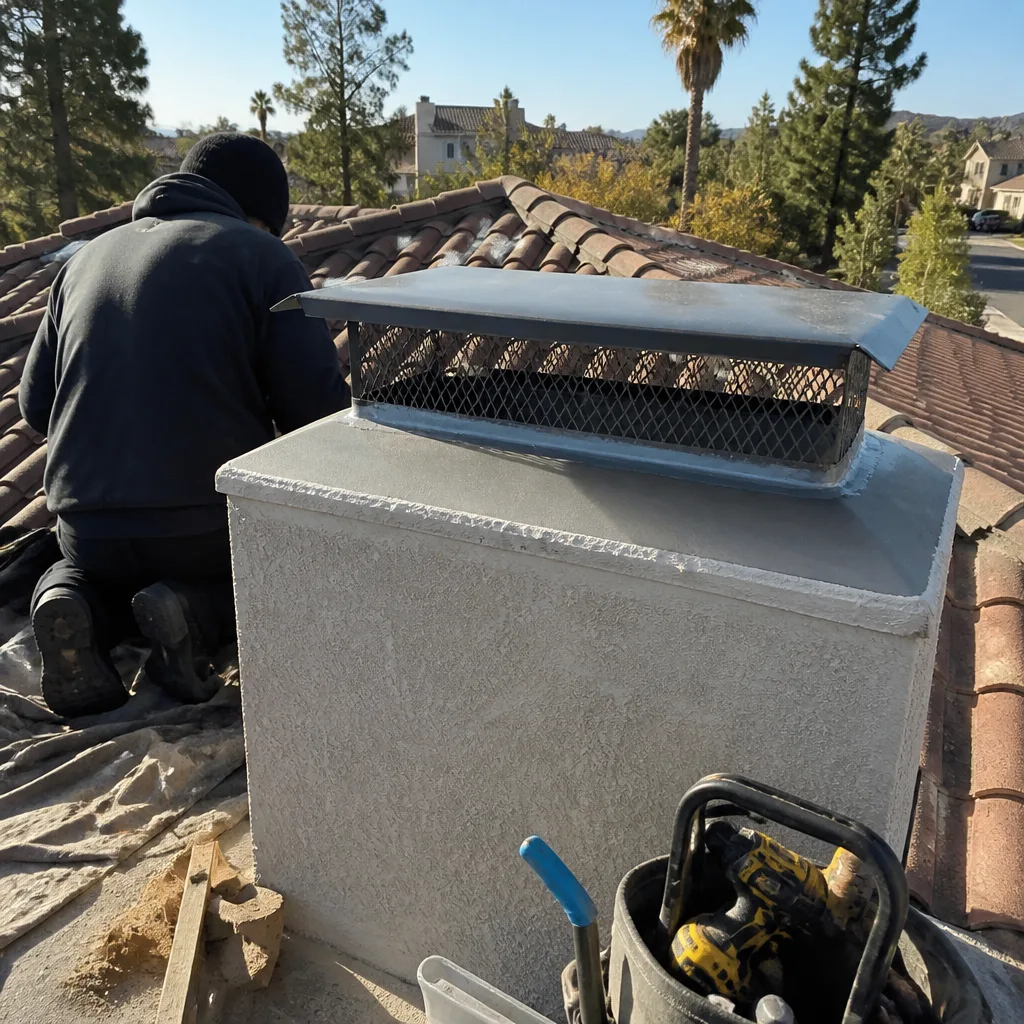 After
What to Expect During a Professional Chimney Sweep
Knowing what a proper sweep looks like helps you evaluate whether you are getting the service you paid for. Here is the step-by-step process we follow at Mayflower Chimney Sweep, and it is the standard any reputable Murrieta sweep should meet.
- Pre-inspection walkthrough. The technician looks at the fireplace from the outside and inside, checks the damper operation, and asks about your burning habits. This takes five minutes and sets the baseline.
- Area protection. Drop cloths go down around the fireplace opening. A professional sweep leaves the room cleaner than they found it. If a sweep starts drilling without protecting your floor, that is a red flag.
- Flue cleaning. A brush or rotary tool is run through the full flue length from top to bottom or bottom to top, depending on access. For Stage 2 creosote, rotary tools are used. This is the core of the service.
- Smoke chamber cleaning. The technician accesses the area above the damper and cleans the smoke chamber walls. This step is skipped by many single-service sweeps, and it matters in Murrieta because of Santa Ana backflow deposits.
- Firebox cleaning. Ash and debris are removed from the firebox. The damper is inspected and lubricated if needed.
- Cap and exterior check. The technician inspects the chimney cap and the visible exterior chimney structure from the roof, looking for damage, blockage, or deterioration.
- Final report. You get a summary of what was found, what was cleaned, and any recommendations with photos where relevant. The report should explain conditions in plain language, not trade jargon.
A standard sweep and inspection in Murrieta takes 60 to 90 minutes. If a company quotes 20 minutes, they are not doing the full job. Our guide at Mayflower Chimney Sweep home walks through our full process in more detail, including what to check before and after your appointment.
Common Mistakes to Avoid
- Skipping the annual sweep because the fireplace “barely gets used.” Low-frequency burning creates hardened creosote, not less creosote. The risk does not disappear because the burn count is low.
- Burning unseasoned wood or softwood. Murrieta’s dry climate seasons wood quickly, but only if it is stored correctly. Pine and other softwoods produce more creosote precursors than hardwoods, and unseasoned wood smolders at lower temperatures, which deposits more residue.
- Assuming a prefab fireplace from the 1990s or 2000s is still in good condition. Those systems have a service life, and we are in the window where many Murrieta homes are hitting it. Get it inspected before there is a problem.
- Ignoring Santa Ana wind symptoms. If you smell smoke inside your home during windy conditions, that is a drafting problem, not a quirk. Wind-resistant caps solve many of these issues, but the flue and smoke chamber still need to be cleaned after repeated backflow events.
- Trusting a chimney cleaning without photos. If a sweep tells you the chimney is clean but cannot show you any images, you are taking their word on something you cannot see. Reputable sweeps document their work.
- Putting off dryer vent cleaning because the dryer “still works.” A clogged vent does not stop the dryer immediately. It degrades performance slowly and builds heat until the failure point. The first sign of trouble is often the fire itself.
- Accepting a liner replacement recommendation without a video. This is the single most common upsell in the chimney industry. If there is no camera footage showing the crack or separation, get a second opinion before spending thousands.
When to Call a Professional
Call a professional if you see white staining or cracked brick on the chimney exterior, if you smell smoke inside the home during or after a fire, if you notice an unusual odor coming from the fireplace during summer, if your fireplace has not been inspected in more than two years, or if you are buying or selling a home in Murrieta and need a chimney inspection for the transaction. Also call if your dryer is taking longer than 45 minutes to dry a load, and the lint screen has been cleaned. Do not attempt to inspect the flue interior yourself. The angles are unsafe, the tools are specialized, and the risk of missing a critical detail is high. Mayflower Chimney Sweep offers free estimates in Murrieta. Call (877) 819-0285 to schedule a sweep, inspection, or dryer vent cleaning.
Frequently Asked Questions
A standard chimney sweep with Level 1 inspection in Murrieta costs $180 to $340. The final price depends on flue condition, chimney height, and whether Stage 2 creosote removal with rotary tools is required. Homes that have gone multiple seasons without cleaning typically land at the higher end. Call (877) 819-0285 for an exact quote; estimates are free.
Once per year is the standard, even if you only burn 10 to 15 fires per season. The National Fire Protection Association recommends annual inspection and cleaning as needed. In Murrieta’s low-burn pattern, the cleaning is often still required because glazed creosote builds without burning off naturally.
You need a liner replacement only if a video inspection shows full-thickness cracks, separation, or collapse. Dirty liners need cleaning, not replacing. Mayflower Chimney Sweep shows you the camera footage before recommending any liner work, and when a replacement is warranted, we specify the product, such as DuraFlex or HeatShield, so you know exactly what is going into your chimney.
Creosote accumulates in stages. After two to three years of occasional burning without cleaning, many Murrieta chimneys reach Stage 2 glazed creosote, which requires rotary removal and increases fire risk. After five or more years, Stage 3 tarry accumulation is possible, and the chimney becomes a legitimate fire hazard the next time you light a fire. Call (877) 819-0285 to schedule a sweep before the next burn season.
Gas fireplaces do not produce creosote, but they still require annual inspection for burner condition, venting integrity, and carbon monoxide risk. A gas log set installed in a wood-burning fireplace uses the existing flue, which may still need cleaning if it was previously used for wood. Gas fireplace servicing is part of the inspection scope at Mayflower Chimney Sweep.
Plan for 60 to 90 minutes for a proper sweep in Murrieta. The technician will protect your floors, clean the flue and smoke chamber, inspect the cap and exterior, and provide a summary with photos. A 20-minute sweep is not a full service. We tell you what we find, in plain language, before we touch anything.
The Bottom Line
Murrieta homeowners face a chimney risk profile that is different from cold-climate homes, and the difference matters. Infrequent fires build hardened creosote instead of burning it off. Santa Ana winds push combustion byproducts into smoke chambers that many sweeps skip. And the 1990s and 2000s housing stock is now reaching an age where original prefab components need real inspection. The fix for all of it is the same: annual professional cleaning with a documented inspection, honest reporting with camera evidence, and repairs done with named-brand materials like DuraFlex, HeatShield, and Copperfield. From the firebox to the cap, sweep, repair, reline. That is the standard, and it is worth holding your chimney professional to it.
Written by the team at Mayflower Chimney Sweep, serving Murrieta since 2013.